September is National Preparedness Month, a reminder that emergencies can happen anytime—and the planning ahead saves lives. For healthcare providers of all kinds—hospitals, clinics, home health and hospice agencies, long-term care, and assisted living communities—preparedness is especially critical.
Patients and residents often depend on medications, medical equipment, and daily care that cannot be interrupted. Emergencies such as severe weather, power outages, public health crises, or supply chain disruptions can put that care at risk. Healthcare providers must plan not only for safety, but also for the continuity of daily care.
Key elements of preparedness include:
- A clear emergency operations plan
- Patient/Resident-centered considerations (necessary medications, medical supplies/equipment, mobility aids, etc.)
- Staff training and drills
- Family and community partnerships
- Adequate supplies and backup resources
From natural disasters to power outages and health crises, history has shown that preparation makes the difference. National Preparedness Month is the perfect time for healthcare providers to review their plans, engage staff, and reassure families that their loved ones are safe.
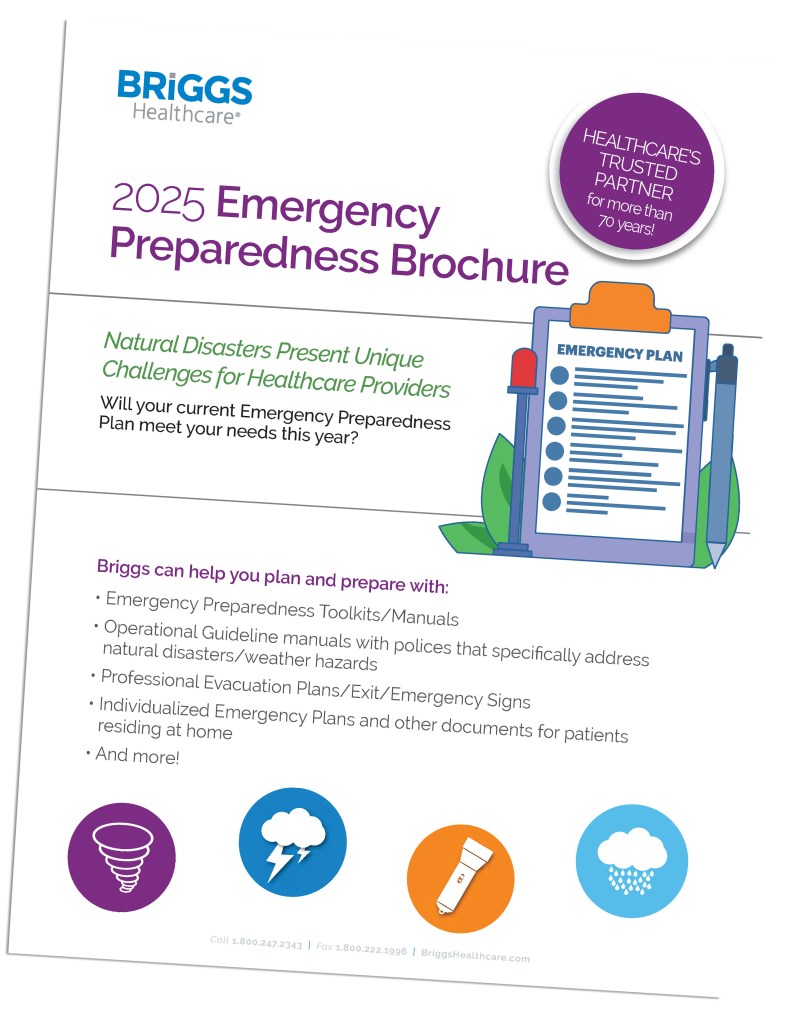
At Briggs we recognize that natural disasters create unique challenges for healthcare providers.
Our 2025 Emergency Preparedness Brochure features the tools and resources you need to strengthen your preparedness plans.

 BriggsNetNews